
Solar heating and cooling uses the sun’s energy. It provides heat and cool air for homes and buildings. This technology is clean. It saves money on electricity bills. In India, where the sun shines bright for most of the year, it makes sense. Many parts of the country get 4 to 7 kilowatt-hours of solar energy per square meter each day. This is enough to power heating and cooling needs. The government supports it too. Programs like the National Solar Mission help people adopt it. As of 2026, India has installed over 70 gigawatts of solar power. This ranks us fifth in the world for solar use. Solar heating and cooling is part of this growth. It helps fight climate change. It reduces our dependence on fossil fuels like coal and gas.
People in India face hot summers and cold winters in some areas. Air conditioners and heaters use a lot of power. This leads to high bills. Solar systems can cut these costs. They work well in rural and urban places. Villages use them for hot water and cooking. Cities use them for air cooling in offices. The technology is simple. It collects sun’s heat. Then it uses that heat for our needs. No smoke or pollution comes from it. This keeps the air clean. Families save time too. Women and girls no longer collect wood for fuel. This reduces health problems like eye and lung issues from smoke.
In 2026, solar heating and cooling is more popular. New trends show better systems. For example, solar-powered air conditioners are common now. They combine with heat pumps for both heating and cooling. Costs have dropped. Government rules make local solar parts mandatory from June 2026. This boosts Indian makers. It cuts imports from other countries. Rajasthan, our top renewable state, plans more solar with some coal backup. But solar leads the way. India aims for 500 gigawatts of renewables by 2030. Solar heating and cooling helps reach this goal.
How Solar Heating Works
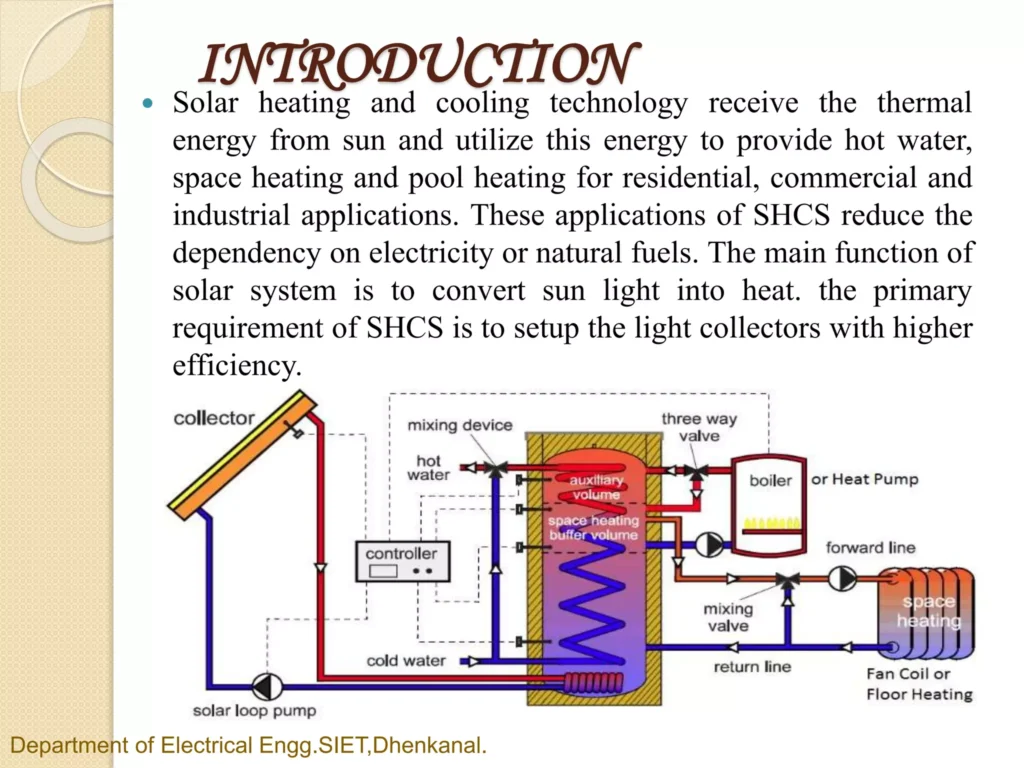
Solar heating starts with collectors. These are flat panels or tubes on roofs. They absorb sunlight. The sun’s rays heat a fluid inside. This fluid can be water or air. It carries the heat to where we need it. For hot water, the fluid goes to a storage tank. The tank keeps the water warm. You can use it for baths or washing. For space heating, the heat warms rooms. Fans or pipes spread it around.
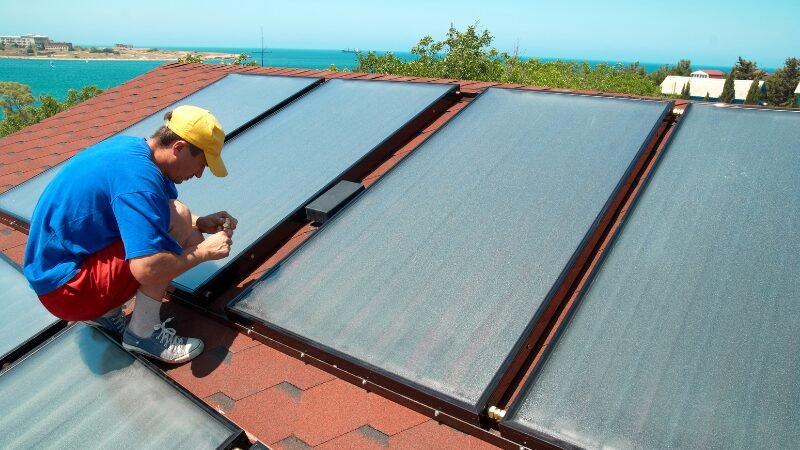
The process is passive or active. Passive means no pumps. Gravity and heat rise do the work. Active uses pumps for better flow. This makes it more efficient. In India, active systems suit big homes or factories. They handle our hot climate well. Collectors are dark-colored. This helps them soak up more heat. Glass covers protect them. They trap heat like a greenhouse.
Latest systems in 2026 use better materials. They lose less heat. Efficiency is up to 70 percent now. This means more heat from the same sun. In cold areas like the Himalayas, solar heating warms homes without wood fires. In hot places like Rajasthan, it provides hot water year-round. No electricity needed during the day. This saves power for other uses.
Types of Solar Heating Systems
There are many types. Solar water heaters are common. They heat water for daily use. In India, millions have them. They come in flat-plate or evacuated-tube types. Flat-plate is simple and cheap. Evacuated-tube works better in cold weather. It has vacuum tubes to keep heat in.
Solar space heaters warm rooms. They use air or water. Air systems blow hot air inside. Water systems heat radiators. These cut heating bills by 70 percent. Passive solar homes are another type. They use building design. South-facing windows let sun in. Thick walls store heat. This is called direct gain. Trombe walls are special. They are dark walls behind glass. They absorb heat and release it slowly.
Solar cookers are for food. They use mirrors to focus sun. Box cookers are simple. Parabolic ones cook fast. In rural India, they save fuel wood. Industrial types heat big spaces. Factories use them for processes. In 2026, hybrid systems mix solar with gas. This ensures heat even on cloudy days.
Also Read Understanding Net Metering Policies in India 2025: Complete Guide for Homeowners Switching to Solar
How Solar Cooling Works
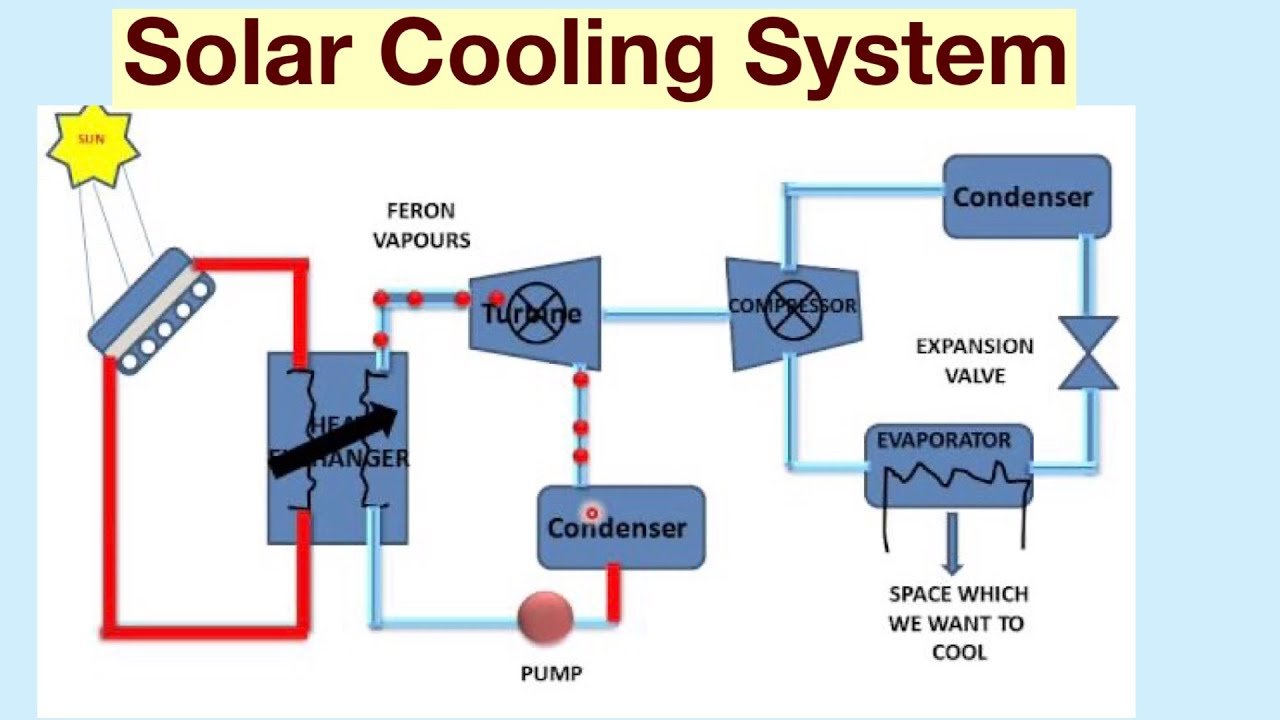
Cooling with sun seems odd. But it works. Solar cooling uses heat to make cool air. Absorption chillers do this. They use solar-heated water. The water boils a refrigerant. This creates cooling. No compressor needed like in normal ACs. This saves electricity.
Another way is desiccant cooling. It dries air first. Dry air feels cooler. Solar heat regenerates the dryer. Passive cooling is simple. It uses design. Cool roofs reflect sun. They drop room temperature by 2 to 6 degrees Celsius. In India, white paint on roofs helps a lot. It fights heat stress.
In 2026, super-efficient ACs are new. They cut energy use by half. Field tests in India show this. Places like Palava City tried them. They reduce peak power demand too. Solar PV powers electric ACs. Panels make electricity. It runs the AC. This is common now.
Types of Solar Cooling Systems
Solar absorption cooling is one type. It uses heat from collectors. The chiller makes cold water. This cools air through coils. Good for big buildings. In India, offices use them.
Solar desiccant systems are another. They remove moisture. Fans blow dry air inside. Solar heat dries the material again. This works in humid places like Mumbai.
Passive radiative cooling is emerging. It sends heat to space. Special paints do this. No energy needed. In 2026, pilots test it in India.
Hybrid solar ACs mix sun and grid. They switch as needed. Portable solar coolers are small. Good for travel or small rooms.
Benefits for Indian Households and Businesses
Solar heating and cooling saves money. Bills drop by 50 to 80 percent. A family can save thousands of rupees yearly. Systems last 20 to 25 years. ROI comes in 4 to 6 years.
It helps the environment. No CO2 from burning fuel. India cuts emissions this way. Our NDC goal is 45 percent less by 2030. Solar helps.
Jobs grow too. Making and installing creates work. Villages get power for lights and fans. Health centers use solar. Over 25,000 PHCs will have it by 2026. This costs 4,000 to 5,000 dollars each. It powers medical tools.
In heat waves, cooling saves lives. Heat stress could cost 34 million jobs by 2030. GDP loss up to 4.5 percent. Cool roofs and solar ACs fight this. Women benefit most. They work in hot homes.
Businesses cut costs. Factories save on energy. Solar mandates from 2026 boost local economy.
Installation Process
First, check your site. Roof space is key. South-facing is best. No shade from trees.
Choose system type. For homes, water heaters are easy. Pros install collectors. They connect pipes to tanks.
For cooling, add chillers. Electricians wire PV panels if needed.
In India, certified installers do it. It takes 1 to 3 days. Maintenance is low. Clean panels yearly.
Government helps with subsidies. Check MNRE site.
Costs and ROI in India
Costs vary. A solar water heater for a family is 20,000 to 50,000 rupees. Solar AC setup is 1.2 lakh to 3.5 lakh rupees. This includes panels and inverter.
A 1.5-ton AC needs 4 to 6 panels. That’s 1.5 to 2 kW.
Subsidies cut costs. ROI in 4 to 6 years. Save 80 to 90 percent on AC bills.
In 2026, prices may rise 25 to 30 percent. But local making keeps it affordable.
Government Schemes and Incentives in India
MNRE leads. National Solar Mission started in 2010. It promotes solar.
Schemes include rooftop solar. Subsidy up to 40 percent. Solar parks for big projects.
FDI is 100 percent automatic. No inter-state charges till 2025. RPO makes utilities buy solar.
Green Energy Open Access helps. LPS rules ensure payments.
In 2026, local content mandate starts. All panels must be Indian-made.
Challenges in India
Sun is not always out. Cloudy days need backup. Batteries add cost.
Upfront price is high for poor families. Loans help but not always.
Skilled workers are few in villages. Training is needed.
Dust on panels reduces efficiency. Regular cleaning required.
Grid issues in remote areas. Off-grid systems solve this.
Heat stress grows with climate change. More cooling needed.
Latest Trends and Future in 2026
In 2026, solar with heat pumps is big. They do heating and cooling. Cities mandate them for new ACs.
Super-efficient ACs cut use by half. Passive cooling like PDRC tested.
India’s manufacturing surges. Mandate boosts it.
Cooling for health centers expands. Bus stops get cool designs.
Global trends show solar cheaper than fossil. Batteries drop price.
India aims net-zero by 2070. Solar heating and cooling key.
Case Studies from India
In Ahmedabad, cool bus stops use grass and mist. Temperature drops 6 to 7 degrees. Cost 4,000 dollars first one.
Mahila Housing Trust paints roofs white. Women in slums get cooler homes. Reduces heat by 2 to 6 degrees.
SELCO Foundation solarizes PHCs. 25,000 by 2026. Powers vaccines and lights.
In Rajasthan, solar with storage meets demand. Even with coal backup, solar grows.
Palava City tests efficient ACs. Cuts peak load.
These show real impact.
FAQs
What is solar heating and cooling?
Solar heating uses sun to warm water or air. Cooling uses sun’s heat or power for ACs. It’s clean and saves money.
How much does a solar water heater cost in India?
It costs 20,000 to 50,000 rupees for a family. Subsidies make it cheaper.
Can solar power run my AC?
Yes. Solar panels provide electricity. Or use absorption for heat-driven cooling. Saves 80 percent on bills.
What government help is there?
MNRE gives subsidies. Rooftop scheme up to 40 percent off. Local mandate from 2026.
Is installation hard?
No. Pros do it in 1 to 3 days. Need roof space and no shade.
What if it’s cloudy?
Backup like batteries or grid. Hybrid systems switch.
How long do systems last?
20 to 25 years. Low maintenance needed.
Why choose solar in India?
Abundant sun. Cuts bills. Helps environment. Creates jobs. Fights heat waves.