Government support for rooftop solar has grown strongly in India.
The Ministry of New and Renewable Energy offers subsidy benefits for homeowners.
These subsidies lower your initial investment.
They help you recover the cost of your solar system faster.
In 2025 rooftop solar is becoming more popular across Indian cities, towns and rural areas.
This step by step guide explains how to apply for MNRE solar subsidies, how to use the national rooftop portal and how to meet DISCOM requirements.
All information is written in simple English for better readability.
This article also integrates important solar keywords such as MNRE solar subsidy, rooftop solar installation, ALMM approved solar panels, net metering process and solar system documents.
Why MNRE Solar Subsidies Are Important for Indian Households
The MNRE solar subsidy program reduces the cost of rooftop solar systems.
It encourages homeowners to choose quality solar panels and certified installers.
This support promotes clean energy and reduces dependence on grid electricity.
In 2025 the demand for residential solar is rising and subsidies play an important role in making solar affordable for common households.
Key Terms You Should Know Before Applying
Understanding basic solar terms makes the process easier.
MNRE
The Ministry of New and Renewable Energy responsible for solar program rules.
ALMM
The Approved List of Models and Manufacturers for solar panels.
Many subsidy schemes require ALMM approved solar panels.
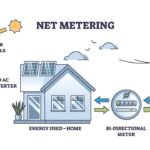
Net Metering
A process where excess solar electricity goes to the grid.
Your DISCOM credits you for exported units.
DISCOM
Your state electricity distribution company.
It handles feasibility approval and net meter installation.
PM Surya Ghar
A national residential rooftop solar program widely used in 2025.
These terms appear often during the subsidy application.
Eligibility for MNRE Solar Subsidy in India
Most residential consumers are eligible.
You must have a valid electricity connection in your name.
You must own the rooftop or have permission to install panels.
You must use approved solar components and submit correct documents.
Some state specific schemes have income or category based eligibility.
Rooftop solar system size must follow DISCOM rules.
What Equipment Is Allowed Under MNRE Subsidy
The MNRE requires strict quality standards.
Solar panels must follow ALMM rules in all states where required.
The inverter must meet BIS certification.
The mounting structure and wiring must follow safety standards.
If you use non approved panels your subsidy may be rejected.
Choose a reliable vendor familiar with MNRE guidelines.
Also Read Ultimate Guide to Installing a Solar Water Heater in India in 2025
Step 1 — Prepare Documents Before Applying
Collect these documents early to avoid delays.
- Recent electricity bill
- Consumer number and address details
- Aadhaar or other ID proof
- Bank account details for subsidy transfer
- Roof photographs
- Vendor quotation with system size and specifications
- Panel and inverter details if available
Staying organized makes the subsidy process faster.
Step 2 — Register on the National Rooftop Solar Portal
Create an account on the national rooftop portal used for MNRE subsidy applications.
Enter your mobile number, email and consumer details.
Verify your profile information.
The portal connects your details with your DISCOM.
This is the first official step to apply for rooftop solar subsidy.
Step 3 — Select the Right Solar Vendor
Choose a solar installer who understands rooftop solar rules.
Ask if they have handled subsidy files earlier.
Ensure they offer ALMM approved solar panels.
Check if they follow standard installation practices.
A good vendor helps with DISCOM approvals, installation and documentation.
Step 4 — Apply for Feasibility Approval
Submit your rooftop solar application on the portal.
Upload photos and system details.
Your DISCOM checks technical feasibility.
This includes grid load, transformer capacity and meter compatibility.
Approval time varies by state and city.
Do not install the system until you receive feasibility clearance.
Step 5 — Install the Rooftop Solar System
Once approved you can start installation.
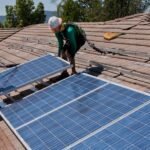
Your vendor installs solar panels, inverter, AC and DC wiring, protection devices and earthing.
Take clear photos during installation.
Keep panel and inverter serial numbers.
Follow all safety practices.
Proper installation helps with a smooth net metering and subsidy claim.
Step 6 — Commission the Solar System
After installation the vendor commissions the system.
This includes inverter configuration, performance testing and safety checks.
You will receive a commissioning certificate.
Store this document carefully because it is required for subsidy approval.
Step 7 — Apply for Net Metering Through DISCOM
Submit your net metering request after commissioning.
The DISCOM will inspect your system.
Then the old meter is replaced with a bi directional net meter.
Net metering is essential to earn credit for extra units you export to the grid.
Step 8 — Submit All Documents for Subsidy Claim
After net metering approval upload your documents.
These include:
- Invoice with item wise cost
- Commissioning certificate
- Installation photos
- Technical report
- Net meter installation proof
- ALMM certificate for solar panels
- Bank details
- Warranty documents
Missing documents often cause delays so check your file carefully.
Step 9 — Subsidy Release and Payment Process
The subsidy is usually transferred directly into your bank account.
Payment time depends on the scheme and verification speed.
Keep checking the portal for updates.
If a vendor is involved make sure you know the agreed subsidy reduction amount.
Direct benefit transfer is often more transparent for homeowners.
Step 10 — Handling Delays or Rejection
If your subsidy is delayed check your portal status.
Correct any errors in your uploaded documents.
Common issues include wrong panel model, unclear photos and missing signatures.
If the claim is rejected fix the issue and reapply immediately.
Your vendor should help with this step.
Tips to Ensure Smooth MNRE Subsidy Approval
- Use ALMM solar panels
- Buy from reputable vendors
- Collect serial numbers of all components
- Take clear roof and installation photographs
- Follow DISCOM net metering rules
- Do not change system size without permission
- Keep copies of every document
These small steps protect your subsidy claim.
State Level Subsidy Top Ups
Many states offer additional subsidy beyond MNRE support.
Some states release this separately.
Others combine state and central subsidy.
Check your state DISCOM or energy department website for updates.
A combination of MNRE subsidy and state subsidy can lower your final cost even more.
How Long Does the Entire Process Take
The duration varies across states.
Typical timelines:
- Registration and vendor finalization: a few days
- Feasibility approval: one to three weeks
- Installation: one to seven days
- Net metering: a few days to a few weeks
- Subsidy payment: several weeks depending on verification
Keep checking updates on the portal for faster action.
Frequently Asked Questions
1. Who can apply for MNRE solar subsidy in 2025
Any residential consumer with a valid electricity connection can apply.
2. Do I need ALMM approved solar panels for subsidy
Yes. Most subsidy programs require ALMM listed panels.
3. Can I install the rooftop solar system before approval
No. Install only after feasibility approval from the DISCOM.
4. How much subsidy can I get under MNRE rules
The subsidy depends on system size and scheme year. Rates change based on the program.
5. Does the vendor apply for the subsidy on my behalf
You apply through the national rooftop portal but the vendor supports the process.
6. How long does subsidy payment take
It may take several weeks depending on verification and processing speed.
7. Can I get both central and state subsidies
Yes, if your state offers a top up scheme and you meet the requirements.
8. Can tenants apply for the subsidy
You need the rooftop owner’s written permission to be eligible.
Final Words
Rooftop solar is one of the best ways to cut electricity bills in India.
The MNRE solar subsidy in 2025 makes solar systems more affordable.
Follow each step carefully from registration to net metering.
Choose ALMM approved panels and certified installers.
Submit documents on time and track updates regularly.
With the right planning you can enjoy clean power, high savings and long term energy independence.